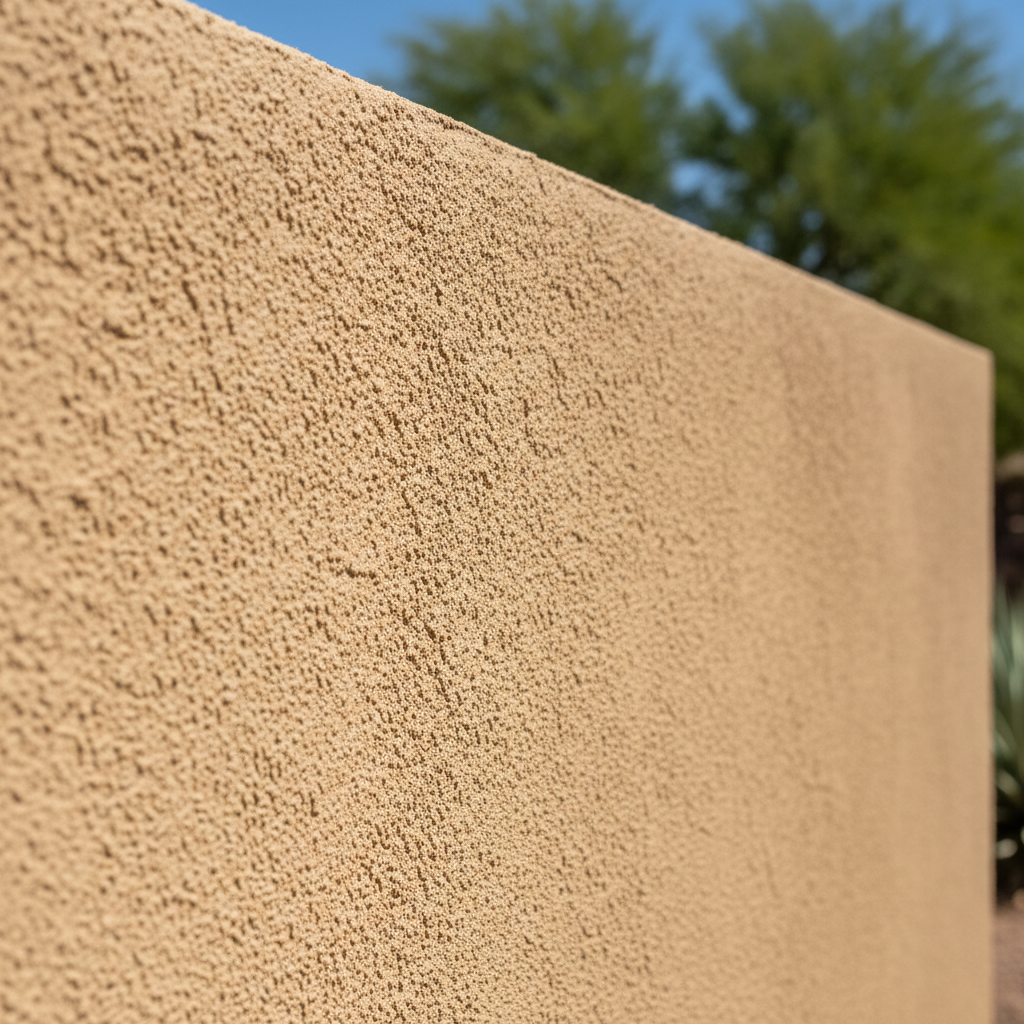
Stucco cracking on exterior walls is a common issue for homeowners in Queen Creek, AZ. The extreme summer heat and bone-dry desert air put severe stress on stucco surfaces. Homes in Spur Cross and Cortina deal with thermal expansion every single day. Catching problems early saves money on repairs, and homeowners can easily spot the trouble signs themselves. Queen Creek Stucco & Plastering recommends a systematic approach to performing a proper Stucco Inspection for properties in Queen Creek.
Before You Start: Getting Your Eyes Ready
Inspecting your exterior does not require a large amount of specialized gear. Homeowners should grab a notepad, a flashlight, and a blunt metal object like a coin or a small key. Pick a time when the sun hits the walls at an angle, usually early morning or late afternoon. That oblique lighting makes hairline cracks and bulges much easier to see than the harsh midday glare. Walk the entire perimeter of your house and clear away any bushes or irrigation lines that block your view of the bottom two feet of the wall. That lower section is where most moisture problems hide on homes in Queen Creek.
During the Walkthrough: What You Can Do Yourself
Start scanning your walls from the top down, paying close attention to where the roofline meets the stucco. Look for stair-step cracks around windows and doors because those are classic stress points. When you find a crack, use your coin to tap gently on either side of it. If it sounds hollow, the stucco has delaminated from the lath underneath and moisture has likely gotten behind it. Homeowners can handle sealing hairline cracks with a high-grade elastomeric caulk if they are smaller than the thickness of a credit card. Take photos of everything so you can track whether those cracks are growing over the next few months.
When to Stop Guessing and Call a Pro
There is a clear line between what a homeowner can safely repair and what requires professional tools. If you spot white, powdery residue weeping through the finish, that is efflorescence telling you salts are being pushed out by trapped water. Stains that look like dark water trickles, soft spots in the wall, or bulges where the surface feels spongy mean you have internal damage. That is the exact moment to call Queen Creek Stucco & Plastering. Our team brings in thermal imaging cameras and moisture meters to see what is happening behind the barrier without tearing your whole wall apart.
After the Inspection: Making Your Game Plan
Once you finish your walkthrough, categorize your findings into three groups: cosmetic hairline cracks you can seal this weekend, questionable areas to keep an eye on every month, and red-flag moisture zones that need an immediate contractor quote. Do not ignore those red flags just because they look small from the street. The caliche-heavy desert soil and monsoon downpours in Queen Creek will cause severe damage once water finds a way inside. Staying proactive keeps your exterior solid and your Stucco Repair bills low.